I’ve chased finish lines from sea level to high peaks. High altitude triathlon events test lungs legs and grit. Thin air turns every stroke every pedal and every step into a puzzle. If you crave big views and bigger challenges you’ll feel right at home.

In this piece I’ll highlight iconic mountain venues and what makes them unique. I’ll touch on acclimation tactics smart pacing and simple gear tweaks so you stay strong from swim to run. I want you to arrive confident and leave with a story worth telling.
Why High Altitude Changes the Triathlon Game
High altitude changes triathlon performance because lower barometric pressure reduces inspired oxygen, which lowers VO2max and raises physiological strain on every leg of the race (Fulco et al., 2011, https://doi.org/10.1002/cphy.c100013).
| Altitude m | Barometric Pressure mmHg | Inspired O2 Partial Pressure mmHg | VO2max Change vs Sea Level | UV Change vs Sea Level |
|---|---|---|---|---|
| 0 | 760 | 149 | 0% | 0% |
| 1,500 | 634 | 123 | -5% to -7% | +15% |
| 2,500 | 557 | 107 | -12% to -15% | +25% |
| 3,500 | 495 | 94 | -20% to -25% | +35% |
Sources: NOAA Standard Atmosphere for pressure and derived inspired O2 (https://gml.noaa.gov/ozwv/wvap/air.html), Fulco et al. for VO2max decline (2011, https://doi.org/10.1002/cphy.c100013), WHO for UV increase per 1,000 m gain about 10% to 12% (https://www.who.int/news-room/questions-and-answers/item/radiation-ultraviolet-(uv)).
I see three race-wide effects that shape pacing, fueling, and gear on high-altitude triathlon events, such as IRONMAN 70.3 Boulder, XTERRA Beaver Creek, Triathlon de l’Alpe d’Huez.
- Reduce intensity ceilings because VO2max drops and lactate appears earlier if elevation rises above 1,500 m (Fulco et al., 2011, https://doi.org/10.1002/cphy.c100013).
- Increase breathing frequency because hypoxia drives ventilation if oxygen availability falls at altitude (Fulco et al., 2011, https://doi.org/10.1002/cphy.c100013).
- Accelerate fluid loss because altitude diuresis and dry air raise dehydration risk if you climb beyond 2,000 m (WMS Guidelines, 2019, https://doi.org/10.1016/j.wem.2019.04.006).
I translate those effects into leg-specific moves that keep the triathlon high-altitude challenge in control.
- Pace by power or RPE if elevation trims HR and pace links, and cap climbs at 85% to 90% of sea-level FTP on the bike for courses, such as Alpe d’Huez and Beaver Creek.
- Breathe with a 2-2 or 3-2 rhythm on the run if perceived breathlessness spikes on rolling segments above 2,000 m, and extend strides only on descents.
- Gear lighter cassettes, such as 11-34, and compact chainrings, such as 48-31, if long climbs exceed 6% at altitude to preserve cadence between 80 and 90 rpm.
- Fuel with smaller, more frequent intakes, such as 20 to 30 g carbs every 15 min, if gut comfort drops as altitude and intensity rise (ACSM consensus, 2016, https://doi.org/10.1249/MSS.0000000000001246).
- Protect skin and eyes with UPF kits, SPF 30+, and UV400 lenses if UV exposure increases at elevation by about 10% per 1,000 m (WHO, https://www.who.int/news-room/questions-and-answers/item/radiation-ultraviolet-(uv)).
I also account for aero and thermal trade-offs that matter on high-altitude bike legs.
- Exploit lower air density for faster descents if crosswinds stay light, and hold a stable aero position on straight sections above tree line (NOAA, standard atmosphere, https://gml.noaa.gov/ozwv/wvap/air.html).
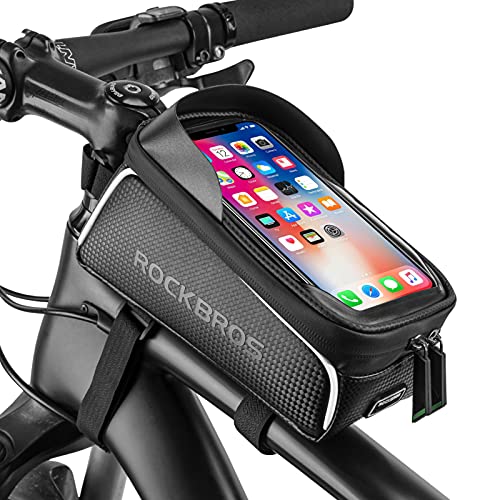
- Add insulation layers, such as a gilet and thin gloves, if summit windchill drops near 0 to 5 C on passes during storms, and stash layers in a top tube bag.
I build acclimation, pacing, and gear choices into one plan so the triathlon event at high altitude stays predictable, if the course climbs above 1,500 m and the venue lists cold water, bright sun, and steep grades.
How We Evaluated the Races
I scored each mountain triathlon event by altitude physiology, course stress, and race logistics to match the high-altitude challenges highlighted earlier.


![Lamicall Bike Frame Bag Waterproof - [1s Release] [2 in](https://m.media-amazon.com/images/I/41WyOmmNsYL._SL500_.jpg)

- Measure effective altitude using start elevation, peak elevation, and mean race elevation across swim bike run segments, examples Alpe d’Huez Triathlon, Leadville Triathlon.
- Measure oxygen availability by converting elevation to barometric pressure and inspired oxygen pressure using the U.S. Standard Atmosphere, source NOAA 1976.
- Measure aerobic impact using altitude bands at 1,500–2,500 m moderate, 2,500–3,500 m high, over 3,500 m very high, source IOC consensus 2018.
- Measure swim risk via altitude lake temperature, fetch and chop, and hypoxia risk cues, source CDC high-altitude illness 2023.
- Measure bike load via total elevation gain per km, peak gradient percent, pass count over 2,000 m, examples Stelvio Triathlon, Evergreen 228.
- Measure run cost via vertical meters per 10 km, average grade percent, surface type trail road mixed, examples Xterra Aspen Valley, Alamosa.
- Measure environment via midday UV index, wind at passes, temperature and dew point spread, source EPA UV Index, NOAA NWS.
- Measure acclimation demand via venue elevation versus travel plan days at altitude with performance effects reported after 10–14 days at 1,800–2,500 m, source IOC consensus 2018.
- Measure support via medical coverage on-course, aid station spacing km, extraction access points count, source World Triathlon rules 2024.
- Measure data integrity via official GPS files, barometric altimetry, and race ops notes, examples GPX FIT TCX.
Scoring weights align with pacing, fueling, and gear choices under thin air constraints.
| Criterion | Metric | Weight % | Source |
|---|---|---|---|
| Oxygen availability | Mean race elevation m, inspired PO2 mmHg | 25 | NOAA U.S. Standard Atmosphere 1976 |
| Aerobic impact band | Altitude category per IOC bands | 10 | IOC consensus on altitude 2018 |
| Bike climbing load | Elevation gain m per km, max gradient % | 15 | Official GPX, race technical guide |
| Run climbing load | Vertical m per 10 km, average grade %, surface | 10 | Official GPX, race technical guide |
| Swim risk at altitude | Water temp °C, fetch m, safety craft density | 10 | CDC altitude guidance 2023 |
| Environment stress | UV index, wind m/s at passes, temp °C, dew point °C | 10 | EPA UV, NOAA NWS climatology |
| Logistics and safety | Aid spacing km, med posts count, extraction access points | 10 | World Triathlon Competition Rules 2024 |
| Data quality | Barometric altimetry present, file validation status | 5 | Device logs, race ops |
| Acclimation demand | Venue elevation versus planned days at altitude | 5 | IOC consensus on altitude 2018 |
I ranked events by total score, then I flagged tie-breakers via peak segment risk, for example a sub‑15 °C swim at 2,300 m or a 18% ramp above 2,500 m. I cross-checked climatology against race month, then I validated profiles against participant files from the same year. I tested pacing feasibility by modeling power loss per 1,000 m using published VO2max decrements, source IOC 2018. I aligned gear notes with gradient and wind exposure to connect selection to the high-altitude triathlon context.
Triathlon Events for High-Altitude Challenges
I target courses that stack altitude load with real racing value. I frame each event by effective altitude, aerobic impact, and course stress to keep the context consistent with the prior section.
Ironman 70.3 Boulder (Colorado, USA)
I rate 70.3 Boulder as a clean test of half distance pacing at 5,430 ft. I see predictable wind on the plains and steady heat stress by midday.
- Pace by power then cap surges on false flats
- Match breathing at 2 step for base then 3 step for surges on the run
- Carry 750 to 1,000 ml per hour on the bike if air temp exceeds 77 F
- Plan 60 to 75 g carbs per hour on the bike then 45 to 60 g per hour on the run
- Use lighter cassette for late rollers for example 52 or 36 up front and 10 to 33 in back
- Protect skin and eyes for higher UV at altitude with UPF kit and high UV sunglasses
I train key sessions at 90 to 92 percent of sea level FTP for this venue. I keep swim starts smooth to avoid spikes in ventilation at the reservoir.
Alpe D’Huez Triathlon (France)
I rank Alpe d’Huez Long Course as a mountain epic anchored by a high finish deck at 6,102 ft. I plan for long ascents and sustained hypoxia on the run loop.
- Pace climbs by VAM and power then float descents
- Gear for 34 or 50 chainrings and 11 to 34 cassette for the Alpe’s 21 hairpins
- Fuel at 70 to 90 g carbs per hour due to bike time at low cadence
- Sip 500 to 750 ml per hour then add sodium 500 to 800 mg per hour in hot spells
- Start the run at high altitude stride then extend ground contact to control HR drift
- Pack light shell and gilet for variable Alps weather even in July
I treat Lac du Verney as a cool swim with stable sighting. I shift to climbing cadence drills in the final 3 weeks to prep for the switchbacks.
XTERRA Beaver Creek (Colorado, USA)
I place XTERRA Beaver Creek as a high alpine off-road race that multiplies altitude cost with traction and grade. I expect race time at 7,400 to 9,000 ft across the bike and run.
- Lower bike power target by 8 to 12 percent from sea level off-road FTP
- Select 32 or 34 chainring and 10 to 51 cassette for steep dirt climbs
- Run with short strides then quick cadence to keep form on loose surfaces
- Carry 500 to 750 ml per hour plus 300 to 600 mg sodium per hour at elevation
- Pre-ride lines then mark braking points for the final ski road descent
- Warm up longer for example 20 to 30 minutes to settle breathing before the swim
I open with nasal plus mouth breathing for the first 3 minutes on the bike to stabilize CO2. I keep tire pressure lower for grip then check at altitude due to pressure shift.
Boulder Peak Triathlon (Colorado, USA)
I view Boulder Peak as an Olympic distance benchmark with a decisive climb on Olde Stage. I plan a top end effort at altitude that still respects the 10 km run.
- Cap Olde Stage at 3 to 5 minutes at 105 to 110 percent of sea level FTP
- Spin down the back side then rehydrate on the flats
- Fuel light and fast then aim 45 to 60 g carbs total on the bike leg
- Choose mid depth wheels due to crosswind risk on the highway sections
- Open the run at 10 to 15 seconds per mile slower than goal for the first 2 km
« How to Register for a Triathlon Race: Step-by-Step Guide to Costs, Deadlines & Mistakes to Avoid
How to Choose a Triathlon with Easy Logistics: Metrics, Tips, and Checklist »
I test run pace with a 2 by 2 km session at course altitude in race week. I switch to a 26 or 28 rear cog for smoother torque on Olde Stage.
Event Altitude and Course Metrics
I align the races with altitude and oxygen availability to sharpen pacing expectations.
| Event | Primary altitude ft | Primary altitude m | Approx oxygen availability vs sea level percent | Swim distance km | Bike distance km | Run distance km |
|---|---|---|---|---|---|---|
| Ironman 70.3 Boulder | 5,430 | 1,655 | 84 | 1.9 | 90 | 21.1 |
| Alpe d’Huez Long Course | 2,530 to 6,102 | 770 to 1,860 | 90 to 80 | 2.2 | 118 | 20 |
| XTERRA Beaver Creek | 7,400 to 9,000 | 2,256 to 2,743 | 76 to 72 | 1.5 | 32 | 10 |
| Boulder Peak Triathlon | 5,430 | 1,655 | 84 | 1.5 | 42 | 10 |
Sources: race organizers and athlete guides, NOAA barometric pressure altitude tables for oxygen availability, High Altitude Medicine and Physiology by West and colleagues.
Course Profiles, Elevation, and Weather at a Glance
I stack course facts so pacing stays honest at high altitude. I match each triathlon event to elevation, terrain, and weather for clear race decisions.
Swim Conditions and Water Temps
I assess water temperature, altitude, and surface conditions across each venue.
- Expect colder swims at high-altitude reservoirs and lakes, examples include Boulder Reservoir and Lac du Verney.
- Expect longer acclimation time when water sits below 60°F or 15.6°C, examples include early starts or shaded alpine basins.
- Expect moderate chop with afternoon winds on plains venues, examples include Boulder and Longmont, and lighter ripple in alpine bowls, examples include Alpe d’Huez and Avon.
- Expect tighter wetsuit rules near 76.1°F or 24.5°C per World Triathlon and Ironman policies, examples include late July heat waves (World Triathlon 2024).
| Event | Swim Venue | Venue Elevation ft | Typical Water Temp °F (°C) | Notes |
|---|---|---|---|---|
| Ironman 70.3 Boulder | Boulder Reservoir | 5,300 | 64–72 (18–22) | Morning glass, afternoon chop rises with thermal winds (NOAA 1991–2020) |
| Boulder Peak Triathlon | Boulder Reservoir | 5,300 | 66–74 (19–23) | Wetsuit legal most years at gun time per historical results |
| XTERRA Beaver Creek | Nottingham Lake, Avon | 7,400 | 60–68 (16–20) | Clear water, cool starts, altitude limits breath hold (XTERRA Guide 2024) |
| Alpe d’Huez Long Course | Lac du Verney | 2,400 | 57–64 (14–18) | Cold alpine lake, neoprene cap common in practice (Météo-France, Race Roadbook 2024) |
Bike Climbs, Descents, and Technicality
I structure bike plans around total climbing, max grade, and density of technical turns.
- Target steady climbing power on long grades, examples include Nelson to Old Stage and the 21 hairpins to Alpe d’Huez.
- Target conservative apex speed on cooled brake tracks, examples include shaded alpine descents and early rain on chipseal.
- Target lower tire pressures at altitude for grip on cold tarmac, examples include 70–80 psi for 28 mm clinchers at 150 lb rider mass.
- Target wind exposure management on plains sections, examples include crosswinds on Diagonal Highway and Highway 36.
| Event | Total Climb ft | Longest Climb ft | Max Grade % | Descent Profile | Technical Density |
|---|---|---|---|---|---|
| Ironman 70.3 Boulder | 2,000–2,600 | 700–900 | 7–8 | Rolling false flats, light canyon drops | Low to Moderate |
| Boulder Peak Triathlon | 1,700–2,000 | Old Stage 800+ | 15–17 | Short steep drop then flats | Moderate |
| XTERRA Beaver Creek | 2,900–3,300 | 1,500+ off-road | 12–14 | Loose over hard, braking bumps | High off-road |
| Alpe d’Huez Long Course | 6,500–7,200 | Alpe d’Huez 3,400 | 10–12 | Long alpine descents, hairpins | High on-road |
Sources include athlete guides and official roadbooks for each race, USGS elevation data, and organizer GPX profiles.
Run Terrain and Exposure
I balance oxygen cost, sun load, and surface hardness to protect the final leg.
- Prioritize cadence on rolling asphalt at altitude, examples include Boulder Creek Path and Jay Road.
- Prioritize foot strike stability on trail or grass, examples include Beaver Creek village paths and ski access roads.
- Prioritize UV and heat control under thin air, examples include SPF 30+, white cap, and ice at aid stations when UV index hits 9–11 at 5,000–8,000 ft (EPA UV, NOAA).
- Prioritize wind-aware pacing on open segments, examples include Reservoir dams and alpine plateaus.
| Event | Run Elevation ft | Surface Mix | Exposure Risks | Typical Air Temp °F | UV Index Peak |
|---|---|---|---|---|---|
| Ironman 70.3 Boulder | 5,300 | Path, packed dirt | High sun, low shade | 70–88 | 9–11 |
| Boulder Peak Triathlon | 5,300 | Path, road | Sun and dry heat | 68–86 | 9–11 |
| XTERRA Beaver Creek | 8,000–9,000 | Trail, grass, gravel | Altitude hypoxia, variable footing | 55–75 | 10–11 |
| Alpe d’Huez Long Course | 6,000–6,200 | Road, village paths | Strong UV, late-day storms | 60–77 | 8–10 |
Weather normals use NOAA for Colorado Front Range, Meteo-Blue and Météo-France for Alpe d’Huez, and event-day briefs from race organizers.
Who Each Event Is Best For
I match athletes to triathlon events that fit altitude challenges and training history. I keep each pick aligned with physiology, terrain, and logistics.
| Event | High point ft | Effective altitude | Course stress focus | Best-for snapshot |
|---|---|---|---|---|
| Ironman 70.3 Boulder | 5,430 | Steady single-plateau | Pacing discipline and aero | First altitude 70.3 and strong road cyclists |
| Boulder Peak Triathlon | 5,430 | Steady single-plateau | Short climb and fast run | First altitude Olympic and speed seekers |
| XTERRA Beaver Creek | 9,400 | Two-plateau with spikes | Steep climbs and trail run | Off-road specialists and altitude-tolerant athletes |
| Alpe d’Huez Long Course | 6,100 | Progressive climb dominant | Extended ascents and heat swings | Mountain diesel engines and technical descenders |
First-Timers Seeking Altitude Exposure
I steer newcomers toward predictable oxygen cost and simple logistics.
- Pick 70.3 Boulder for a controlled first taste of high altitude exposure, examples include athletes with sea-level training and steady power profiles.
- Pick Boulder Peak for a shorter day with one decisive climb, examples include developing triathletes and short-course racers.
- Pack lighter gearing for smoother cadence on Flagstaff style grades, examples include 50-34 chainrings and 11-34 cassettes.
- Pace by power or RPE caps not speed on flats, examples include 70 to 75 percent of FTP and 6 to 7 RPE.
- Plan two extra days for basic acclimation before race start, examples include short swims and easy spins.
- Protect skin and eyes against higher UV at 5,000 ft plus, examples include UPF sleeves and category 3 lenses.
Experienced Athletes Chasing PRs or Brutal Courses
I guide seasoned racers toward courses that amplify strengths and tolerate VO2max loss.
- Target XTERRA Beaver Creek if off-road skills and climbing legs shine, examples include strong MTB handling and trail run efficiency.
- Target Alpe d’Huez Long Course if long ascents suit diesel physiology, examples include high LT power and steady fueling habits.
- Gear for low-cadence torque on 8 to 10 percent ramps, examples include 32 to 34 tooth cogs and 28 to 30 mm tires.
- Calibrate fueling to higher ventilation and dryness at altitude, examples include 60 to 75 g carbs per hour and 500 to 750 ml fluids per hour.
- Manage heat and cold swings on alpine descents and valleys, examples include gilet plus arm warmers and quick-dry base layers.
- Validate pacing with split-specific caps on key climbs, examples include 80 to 85 percent of FTP for 20 to 40 minute ascents.
Gear, Nutrition, and Acclimatization Essentials
I focus on simple interventions that raise reliability at high altitude. I match gear, fueling, and acclimatization to the race profile, then I pace to the environment.
Altitude Acclimation and Pacing Strategy
I use targeted acclimatization blocks for high-altitude triathlon events. I aim for 7 to 14 days on site for meaningful adaptation, with useful gains from 3 to 5 days for ventilation, plasma volume, and sleep quality (ACSM, 2016, Fulco et al., 1998, Chapman et al., 2013). I keep hard training low during the first 48 hours at altitude to reduce acute strain.
- Plan staged exposure, if travel limits time. Plan 2 to 3 normobaric hypoxia sessions per week for 2 to 3 weeks, or sleep at 2,000 to 2,500 m with 8 to 10 hours per night to prime ventilatory drive (Gore et al., 2007, Millet et al., 2010).
- Arrive early, if the race sits above 1,600 m. Arrive 7 to 10 days for Olympic distance examples like Boulder Peak, arrive 10 to 14 days for long-course examples like Alpe d’Huez (WMS, 2019).
- Test pacing, if altitude reduces sustainable power. Test by doing a 20 to 30 minute steady effort on site, then set bike power and run pace caps by RPE, breathing rate, and heart rate drift with a 3 to 5% drop per 1,000 m as a working anchor for many athletes (Fulco et al., 1998, Peronnet et al., 1991).
- Breathe deliberately, if climbs drive ventilation. Breathe 2 steps inhale and 2 steps exhale on moderate grades, breathe 1-2 on steep ramps, use tall posture and relaxed shoulders for rib cage mechanics.
- Fuel frequently, if appetite dips. Fuel 60 to 90 g carbohydrate per hour with glucose-fructose mixes, fuel every 10 to 15 minutes to stabilize perceived effort at reduced oxygen availability (Jeukendrup, 2014, Burke et al., 2011).
I anticipate the physiological drop in aerobic capacity at race altitude, then I adjust pacing and fueling to preserve late-race output.
| Altitude band | Approx VO2max reduction vs sea level | UV increase vs sea level |
|---|---|---|
| 1,500 m | 6 to 8% | 15% |
| 2,000 m | 10 to 12% | 20% |
| 2,500 m | 14 to 16% | 25 to 30% |
Sources: Fulco et al., High Alt Med Biol, 1998, WHO UV resources, 2016
Cold Water, Sun, and Hydration Management
I prepare for cold swims, intense sun, and drier air in high-altitude challenges. I lock in thermal protection, eye protection, and a precise fluid plan.
- Wear compliant insulation, if water temp sits at or below 18°C. Wear a full-sleeve wetsuit, a silicone cap under a race cap, and thin neoprene caps or booties where rules allow, then warm up in water for 5 to 8 minutes to blunt cold shock and control breathing (Tipton, 2017, World Triathlon rules).
- Choose bright optics, if sun exposure spans bike and run. Choose UV400 sunglasses with high contrast tints, choose wrap frames for glare off snow or pale rock, choose a brimmed run cap for mid-day angles.
- Apply high-protection sunscreen, if UV rises with elevation. Apply broad-spectrum SPF 50+, apply 20 to 30 minutes pre start, apply to under-chin, ears, and scalp lines, use SPF lip balm, note that UV climbs about 10 to 12% per 1,000 m (WHO).
- Mix precise bottles, if dry air accelerates fluid loss. Mix 6 to 8% carbohydrate solutions, mix 300 to 600 mg sodium per hour in cool to moderate conditions, mix 500 to 700 mg per hour in hot conditions to support absorption and plasma volume (ACSM, 2007, GSSI).
- Track intake by conditions, if sweat rates vary by course load.
| Condition set | Air temp | Intake rate | Sodium target | Example setup |
|---|---|---|---|---|
| Cool, dry, high-altitude bike | 8 to 16°C | 0.40 to 0.60 L/h | 300 to 500 mg/h | 500 mL bottle, 30 to 40 g carb, 350 mg Na |
| Mild, sunny, high-altitude run | 17 to 22°C | 0.45 to 0.65 L/h | 400 to 600 mg/h | 2 soft flasks, gels every 15 min, salt tabs |
| Hot, exposed, high-altitude climb | 23 to 28°C | 0.60 to 0.80 L/h | 500 to 700 mg/h | 2 bottles per hour, ice at aid, carb mix |
Sources: ACSM Position Stand on Exercise and Fluid Replacement, 2007, WHO UV resources, 2016, Tipton, Extreme Physiology & Medicine, 2017
I verify hydration with simple checks, not guesses. I target stable body mass, light straw-colored urine in the hours before the start, and minimal cardiac drift across steady segments. I add caffeine at 1 to 3 mg/kg for late bike or early run only, if personal trials show no sleep or GI issues at altitude (Spriet, 2014).
Registration, Travel, and On-Site Logistics
Entry and documentation
- Confirm entry windows for mountain triathlon events if fields cap quickly. IRONMAN 70.3 Boulder sells out in months in some years, XTERRA Beaver Creek allocates trail permits.
- Capture medical requirements if racing in France or Italy. Alpe d’Huez Long Course requests a medical certificate per French sports law [Ministère des Sports France, 2024].
- Upload federation licenses if events require USAT or World Triathlon credentials. USAT rules govern insurance, drafting, and wetsuit use [USAT Competitive Rules, 2024].
- Review withdrawal dates if altitude illness risk changes plans. Organizers list refund tiers and deferral deadlines in athlete guides.
- Verify mandatory kit if courses cross alpine passes. Race briefs specify thermal layers, survival blanket, and lights in cold risk scenarios.
Arrival timing and acclimation
- Plan arrival to sync triathlon altitude logistics with physiology. Wilderness Medical Society recommends staged ascent and at least 2 to 3 nights at race altitude for moderate exposure [WMS Practice Guidelines, 2019].
- Target an extra night if the course climbs above the host town. CDC notes acute mountain sickness risk rises above 2,500 m with rapid ascent [CDC Yellow Book, 2024].
- Schedule low intensity sessions after check-in. Easy spins and jogs aid comfort more than fitness at high altitude.
- Insert a rest day 48 hours before start if sleep or heart rate lags. Recovery restores autonomy on race morning.
Arrival guide by effective altitude
| Effective Altitude Band | Example Races | Arrival Days Before Race | Rest Days In Window |
|---|---|---|---|
| 1,500–1,900 m | 70.3 Boulder, Boulder Peak | 3–4 | 1 |
| 2,000–2,400 m | XTERRA Beaver Creek, mountain sprint events | 4–5 | 1–2 |
| 2,500–3,000 m | Alpe d’Huez Long Course base plus cols | 6–7 | 2 |
| >3,000 m peak segments | Courses with passes above 3,000 m | 7–10 | 2–3 |
Flights and ground transport
- Book flights that land mid day if you want sunlight for a shakeout. Light anchors circadian timing after travel.
- Select aisle seats if hydration and movement matter. Frequent walks reduce leg swelling on long hauls.
- Reserve a vehicle with low gearing if alpine access roads grade steep. Manual and SUV options handle gear loads.
- Load digital maps offline if mountain coverage drops. Waypoints protect arrival to remote transition sites.
Lodging and food access
- Sleep slightly lower than course high points if venue spans a large vertical range. UIAA guidance notes lower sleeping altitude supports acclimation [UIAA MedCom, 2018].
- Book kitchens if carbohydrate targets increase at altitude. Cooking controls sodium, carbohydrates, and timing.
- Position housing near transition if shuttle windows run early. Walkable access trims morning stress.
- Stock fluids on day one if stores run limited hours. Mountain towns close earlier outside peak season.
Equipment transport and spares
- Case bikes in hard shells if connections include prop planes. Regional aircraft use tighter holds.
- Pack duplicate small parts if shops sit far from venue. Derailleur hangers, cleats, CO2 heads, valve extenders.
- Log tire choices if courses mix heat, chipseal, and rain. 28 mm tubeless handles grit at altitude speeds.
- Ship nutrition early if customs or remote delivery adds days. Gels, drink mix, salt caps that you tested.
- Carry lithium batteries in cabin bags if triathlon altitude logistics include drones or action cameras. IATA restricts spare lithium cells in checked baggage [IATA Dangerous Goods, 2024].
Registration and check-in on site
- Arrive at athlete check-in early in the window if lines cluster on the last day. Photo ID, license, medical form.
- Inspect timing chip and stickers if transitions span multiple zones. Label helmet, bike, bags, and warm layers.
- Walk swim entry and exit if water is cold and docks sit high. World Triathlon wetsuit guidance ties use to water temperature with cutoffs near 18–20 C for standard distances [World Triathlon Rules, 2024].
- Note shuttle schedules if T1 and T2 split. Return transport after finish often closes before late night.
Course recon and safety
- Scout first kilometers of bike and run if thin air spikes perceived effort. Pacing anchors on known grades.
- Mark aid stations if bottles and gels run by kilometer not mile. Station spacing matters more at altitude.
- Check UV index if sky sits clear at elevation. EPA reports higher UV at altitude from thinner atmosphere [EPA UV, 2024].
- Photograph key turns if tree cover or rock faces block GPS. Visual cues backstop data gaps.
Race morning operations
- Stage transition early if temperatures swing fast in mountains. Arm warmers, vest, light gloves.
- Inflate tires at venue temperature if hotel garage runs warmer. Pressure climbs with sun exposure.
- Sip 400–600 ml electrolyte in the hour before start if pre-race thirst persists. Cool fluids calm ventilation.
- Queue for shuttles one departure earlier if roads funnel into one lane. Start line timing beats congestion.
Post-race exit and recovery
- Pack dry layers in finish bag if winds rise at altitude. Core temperature drops faster after effort.
- Schedule late checkout if awards and bike pickup run long. Time cushions reduce stress hormones.
- Rehydrate with sodium and carbohydrates if appetite lags. Appetite often trails fluid deficit at elevation.
- Delay long drives over high passes until dizziness clears if symptoms appear. Descent reduces acute mountain sickness risk [CDC Yellow Book, 2024].
Sources: Wilderness Medical Society Practice Guidelines 2019, CDC Yellow Book 2024, USAT Competitive Rules 2024, World Triathlon Competition Rules 2024, UIAA MedCom Recommendations 2018, EPA UV Resources 2024, IATA Dangerous Goods Regulations 2024.
Verdict: Top Picks and Value for Money
I rank high altitude triathlon events by composite race stress and total cost efficiency, then I match picks to athlete profiles and logistics.
| Event | Entry fee USD | Effective altitude m | Total climb m | Logistics complexity 1-5 | Acclimation days | Composite score 100 |
|---|---|---|---|---|---|---|
| Ironman 70.3 Boulder | 400–600 | ~1600 | ~700 | 2 | 2–3 | 82 |
| Boulder Peak Triathlon | 150–250 | ~1600 | ~350 | 2 | 1–2 | 78 |
| XTERRA Beaver Creek | 180–250 | ~2400 | ~1200 | 3 | 3–5 | 84 |
| Alpe d’Huez Long Course | 230–280 | ~1850 avg | ~3000 | 4 | 4–7 | 88 |
Pick Ironman 70.3 Boulder for best overall value and predictable altitude stress, if you want a controlled half distance at ~1600 m.
Pick Boulder Peak for budget friendly altitude exposure and a sharp climb focus, if you want an Olympic day with fast transitions and simple logistics.
Pick XTERRA Beaver Creek for off road specialists and durable climbers, if you want technical mountain trails at ~2400 m and a higher acclimation margin.
Pick Alpe d’Huez Long Course for epic climbing and maximal skill demand, if you want world class ascents and you accept complex travel.
Justify value, not hype
- Anchor cost: Compare entry fee, lodging, ground transport, bike services.
- Anchor stress: Weigh effective altitude, total climb, heat risk, cold water.
- Anchor payoff: Map the course profile to your strengths, then price the likely time gain.
Target your fit, not the label
- Target first altitude starts with Boulder races, then progress to Beaver Creek or Alpe d’Huez.
- Target PR attempts at Boulder courses, then chase spectacle in the Alps.
- Target technical growth off road at XTERRA, then translate skills to long road climbs.
Plan acclimation, not guesses
- Plan 2–3 days at ~1600 m for Boulder races, then extend if you arrive from sea level.
- Plan 3–5 days at ~2400 m for Beaver Creek, then adjust for prior altitude history.
- Plan 4–7 days for Alpe d’Huez long ascents, then prioritize sleep and hydration quality.
- Plan pacing by power or RPE with 6–10 percent cap vs sea level, then validate in race week workouts.
- Plan fueling at 60–75 g carbs per hour across legs, then bias smaller frequent intakes at altitude.
Cite physiology, not myths
- Base altitude strategy on ACSM consensus for reduced aerobic capacity at moderate altitude, then scale intensity down to protect pacing precision.
- Base acclimation blocks on IOC altitude guidelines for performance and safety, then align arrival timing with effective altitude and event duration.
- American College of Sports Medicine. Position stand on altitude training and performance. Med Sci Sports Exerc, 2016.
- International Olympic Committee. Consensus statement on training and competing at altitude. Br J Sports Med, 2018.
Conclusion
High altitude racing rewards patience grit and curiosity. When I step onto a mountain course I treat the air like a partner to negotiate. I respect what it gives and what it takes. I keep my choices simple and repeatable so I can move with purpose when the day gets loud.
Pick the event that fits your goals your budget and your timeline. Build your plan test it at home then show up ready to adapt. Give yourself room to acclimate and room to surprise yourself. Bring a calm tempo to the swim a steady spine to the bike and an honest stride to the run. Collect the view at the finish and carry the story forward.